Method: Random & Noise
Chance in Art
please watch this first:
John Cage is one of the key persons of Modern Art (and Music) who investigated chance as a conceptional and philosophic foundation for his creative process. His famous composition 4'33" might sound like nothing at all. It is in fact a kind of a formally structured nothingness. It opens the stage (and ears) for any sound that might naturally occure during the duration of the piece, appropriates it and eleveates it into the realm of art. Thus it questions the limits of an artwork and of the artist.
I use chance operations instead of operating according to my likes and dislikes.
I use my work to change myself and I accept what the chance operations say.
... I don't trust my imagination. I know what my imagination is, and what I'm interest in is what I don't know. John Cage (Richard Kostelanetz, Conversing with Cage)
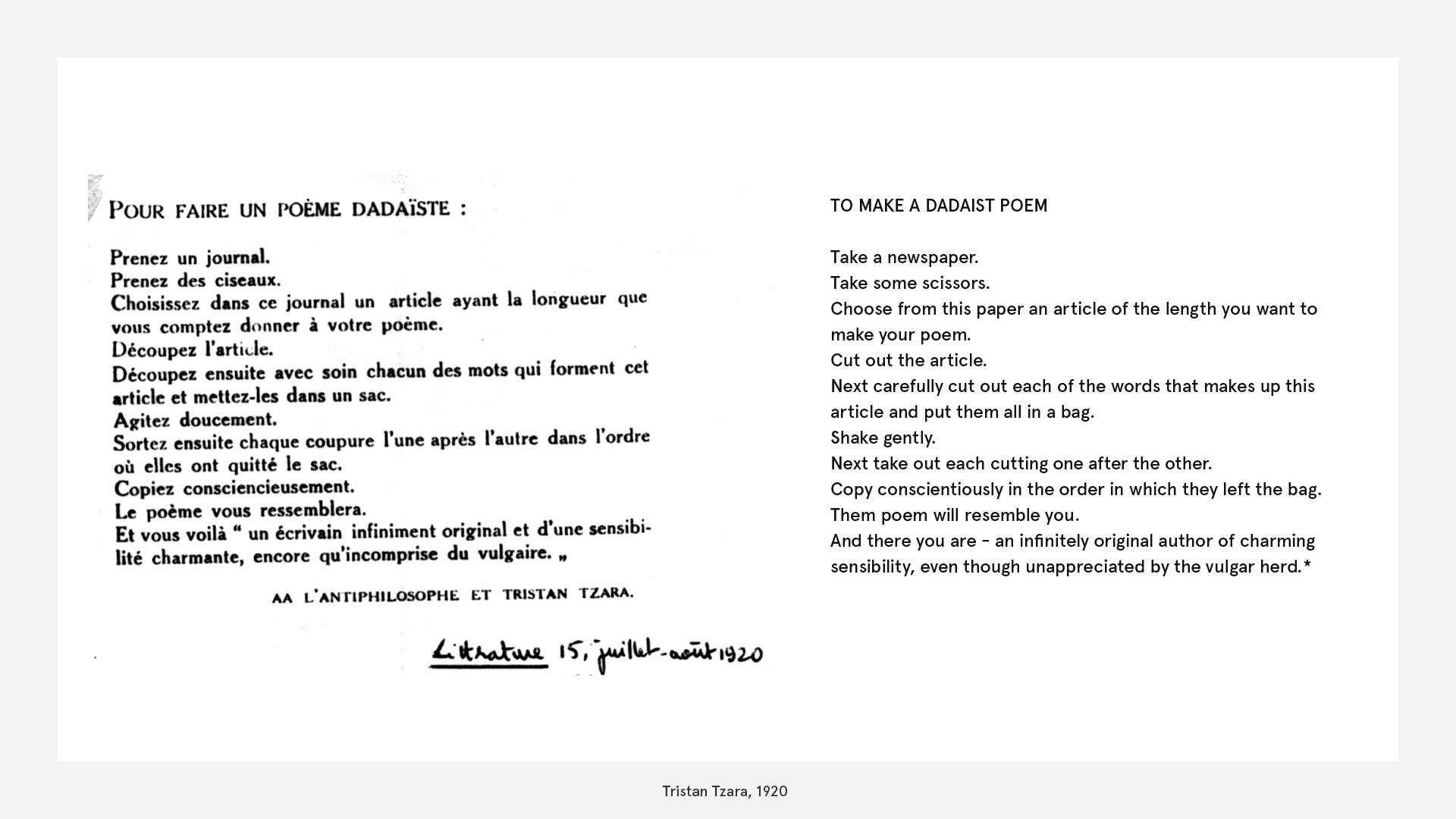
Chance operations are deeply rooted in art history. They become an essential force in Modern Art – most prominently perhaps through the works of Dada and Surrealism. Hans Richter argues that "Chance must be recognized as a new stimulus to artistic creation" (1965).
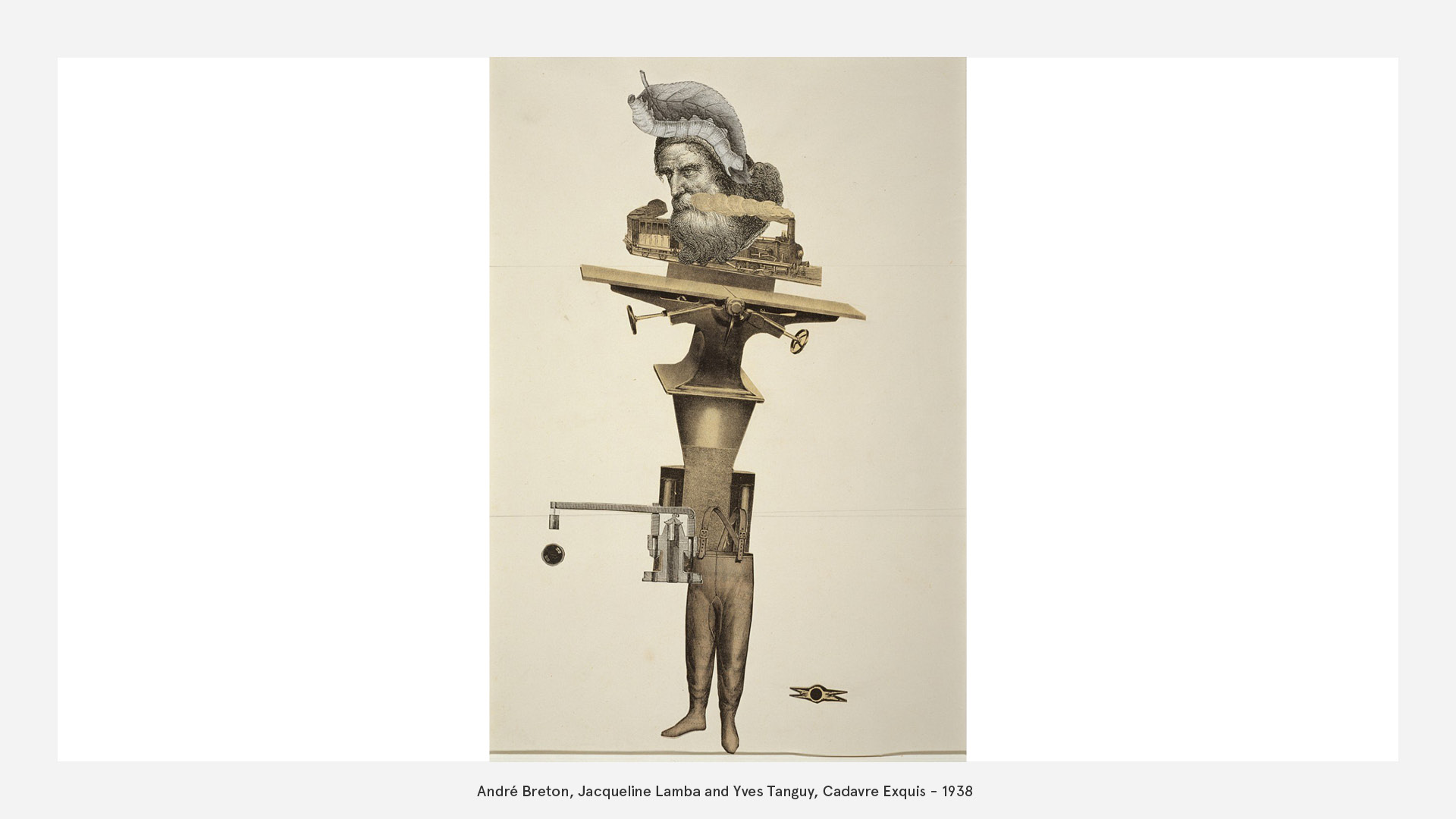 The Surrealists invented the collaborative “Exquisite Corpse” method, where each participant only sees the last part of a sequence of contributions (collage, drawings, sentence,...) onto which he/she adds his/her part.
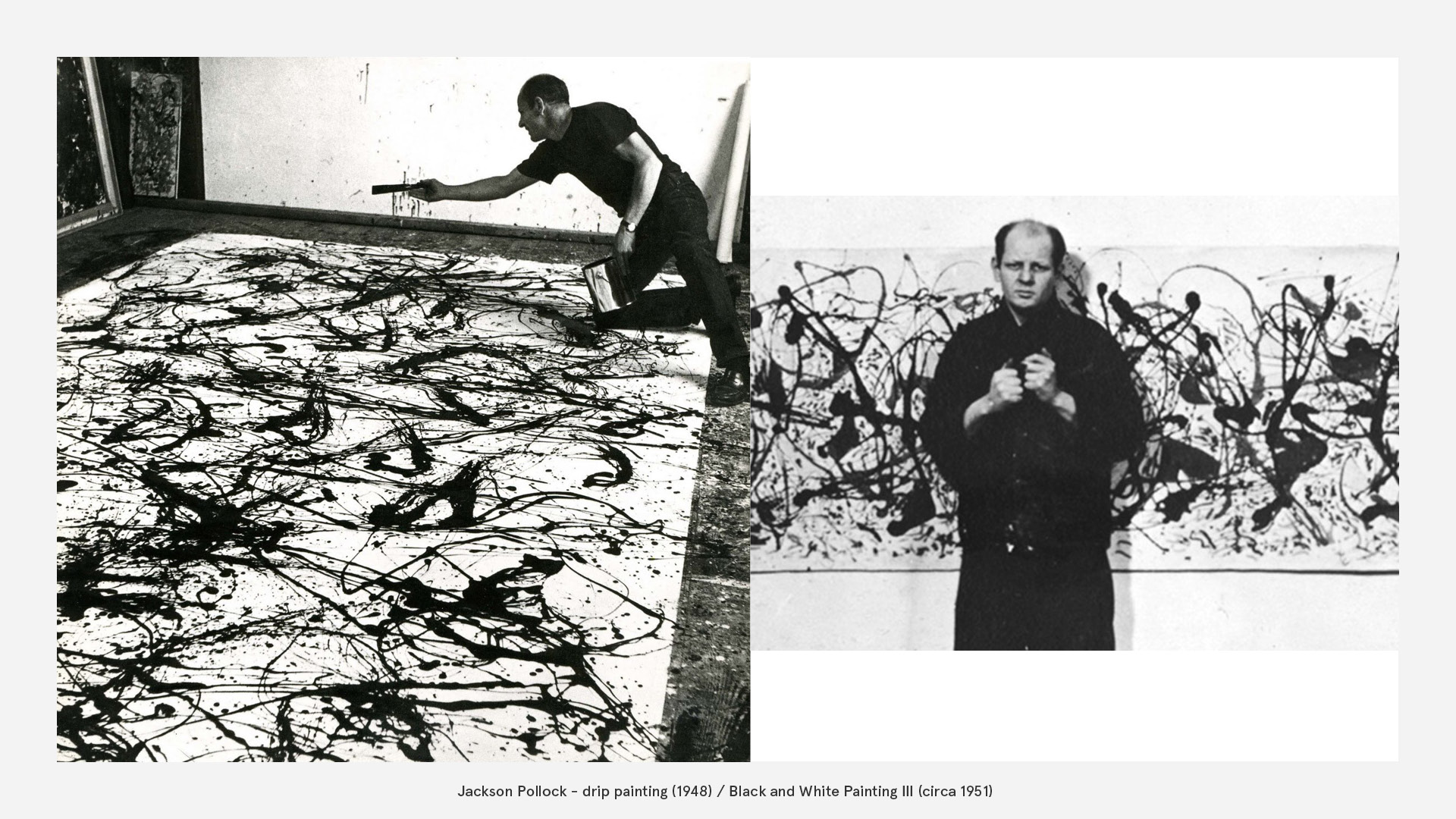
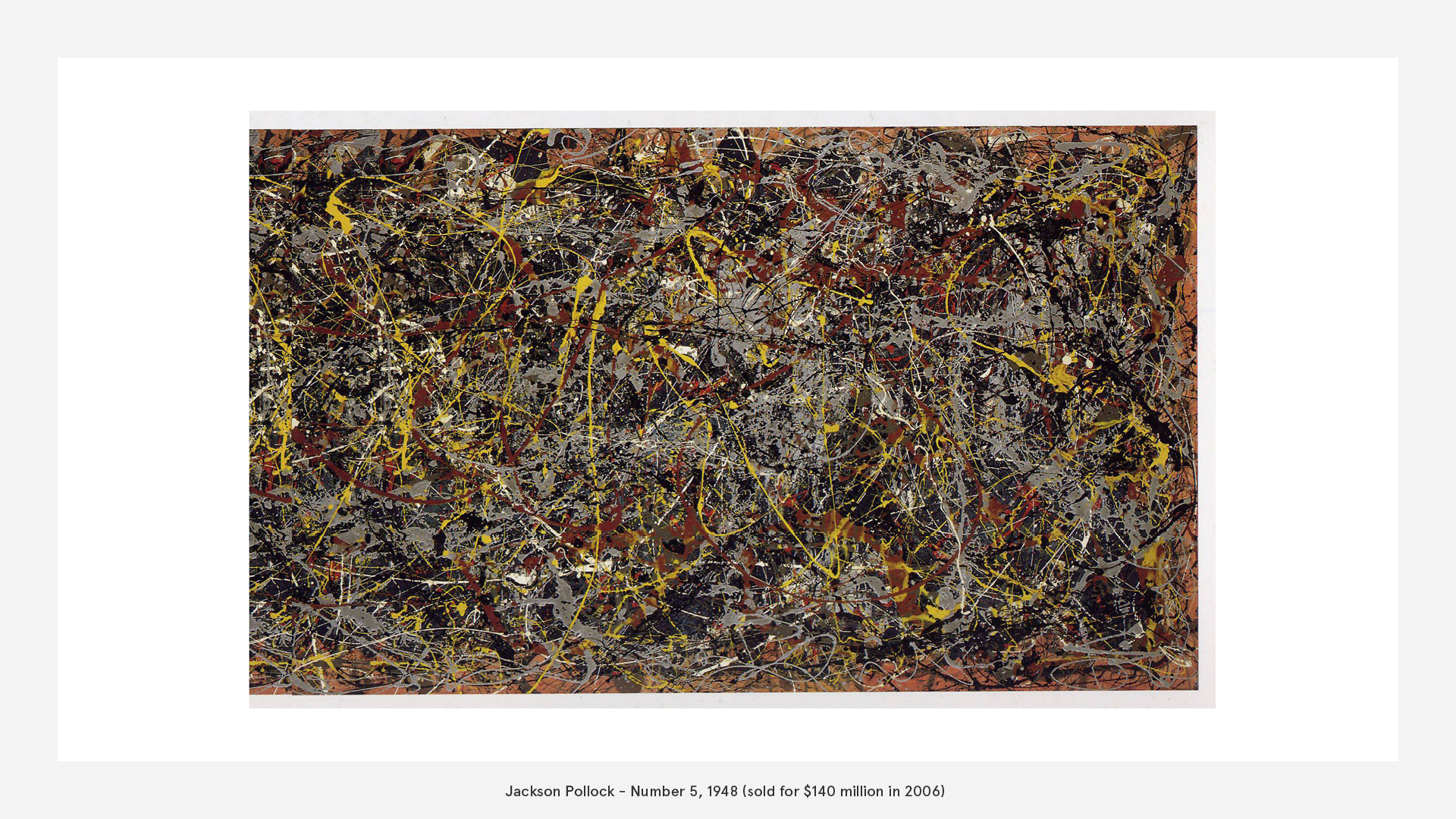
Jackson Pollock's famous drip painting style might appear random at first but in fact contains many distinct features that allow computer analysis to perform a very accurate attribution of a real and a fake. He uses chance techniques as an extension of his mastery of paint flow and movement and thus arrives at his unique style.
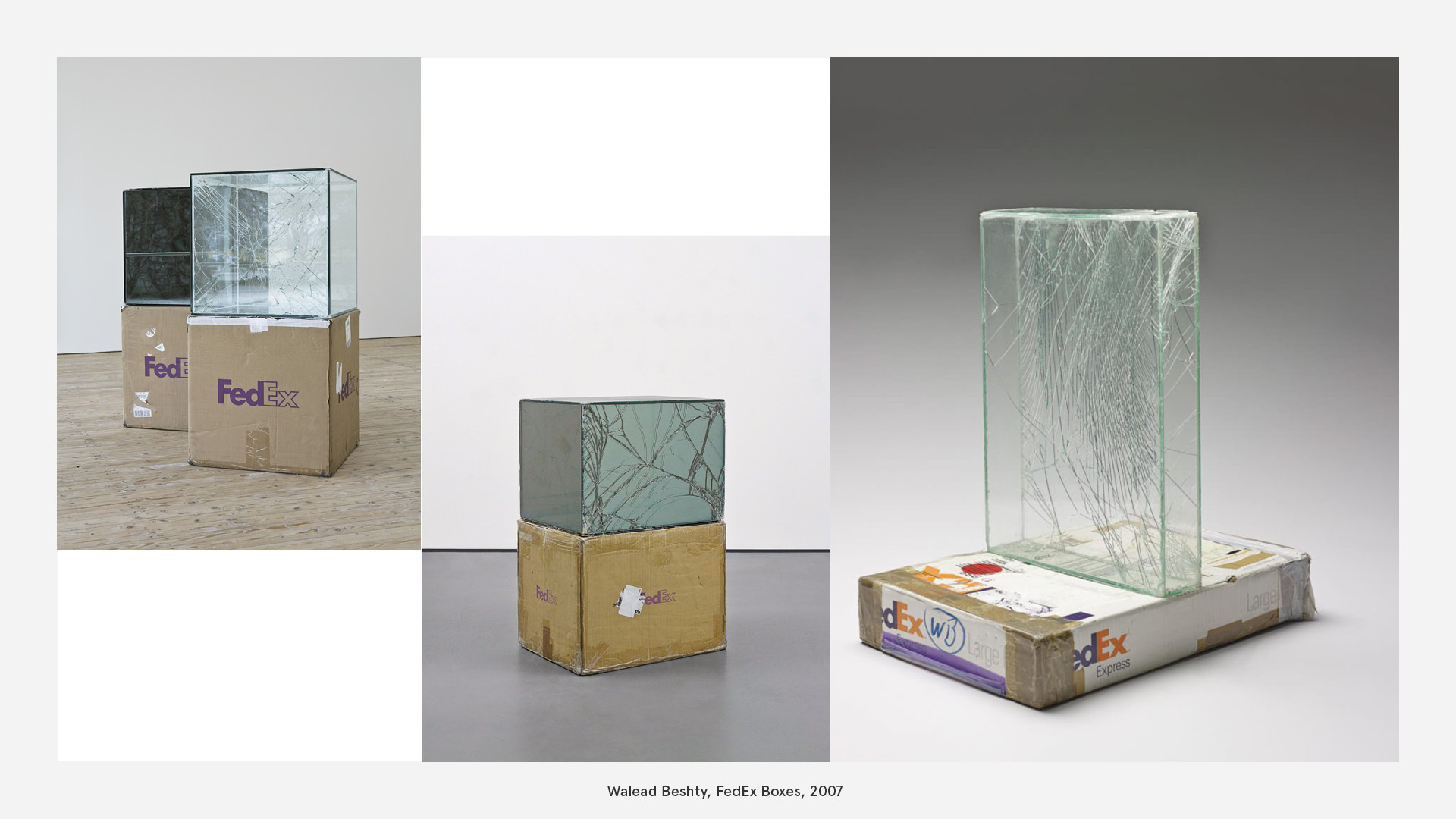
Randomness for Variation
And you of course remember your first generative artwork.
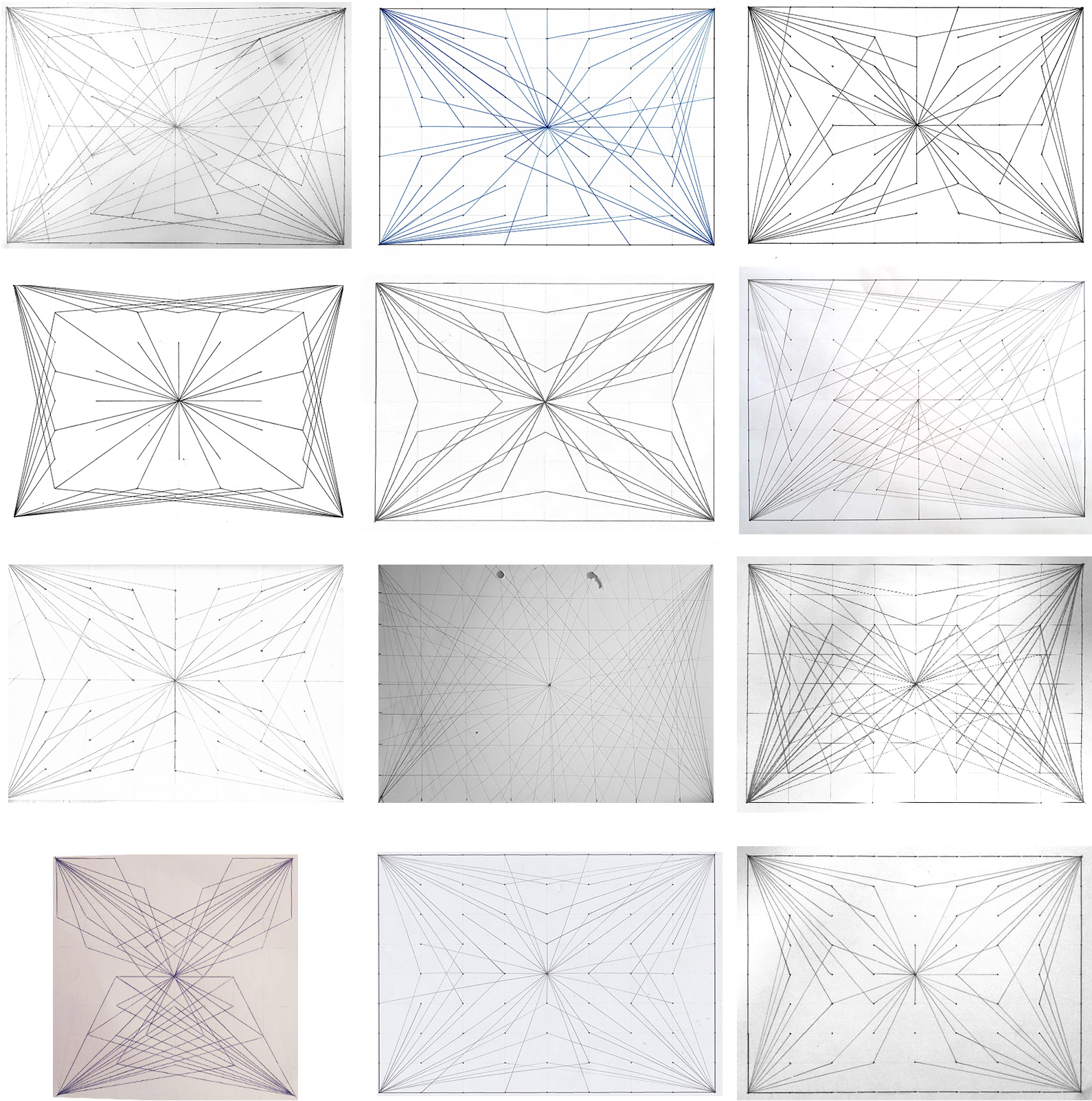
By introducing clear rules, upon which random processes can build we get results that are the same but not the same.
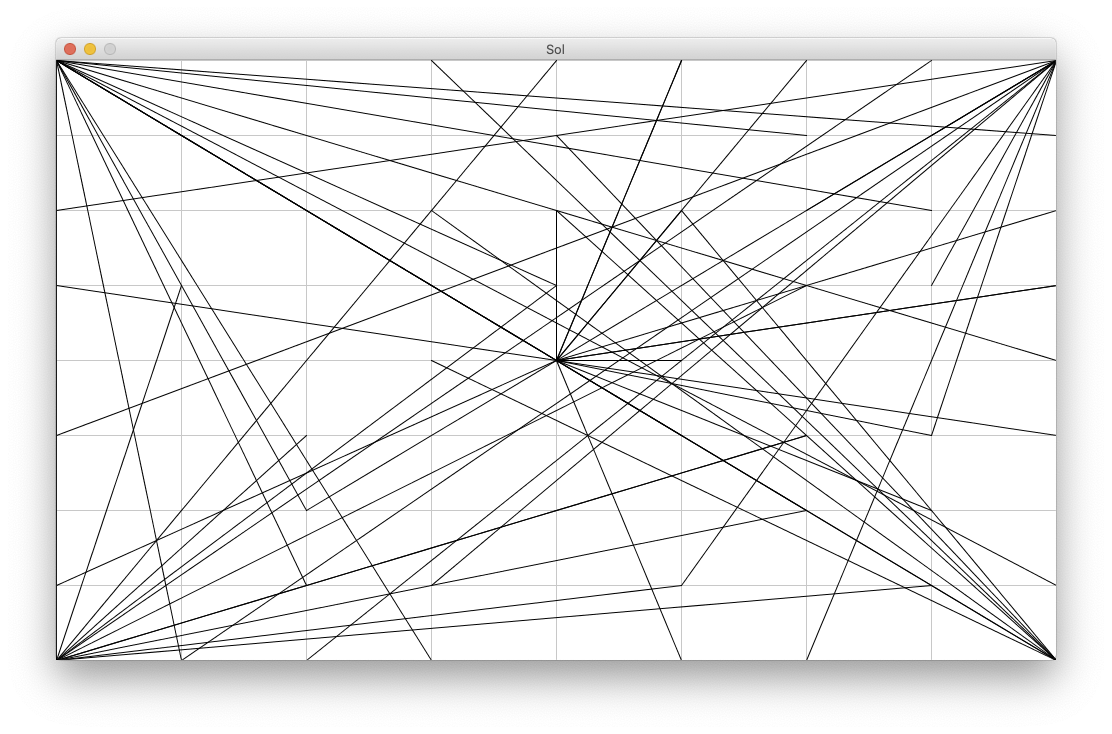
Yet, if you quickly punch that into Processing (Sol.pde) and compare the results to your (hand drawn) creations you will quickly learn how much additional order we naturally apply according to our aesthetic preferences.
Mechanic vs. Organic
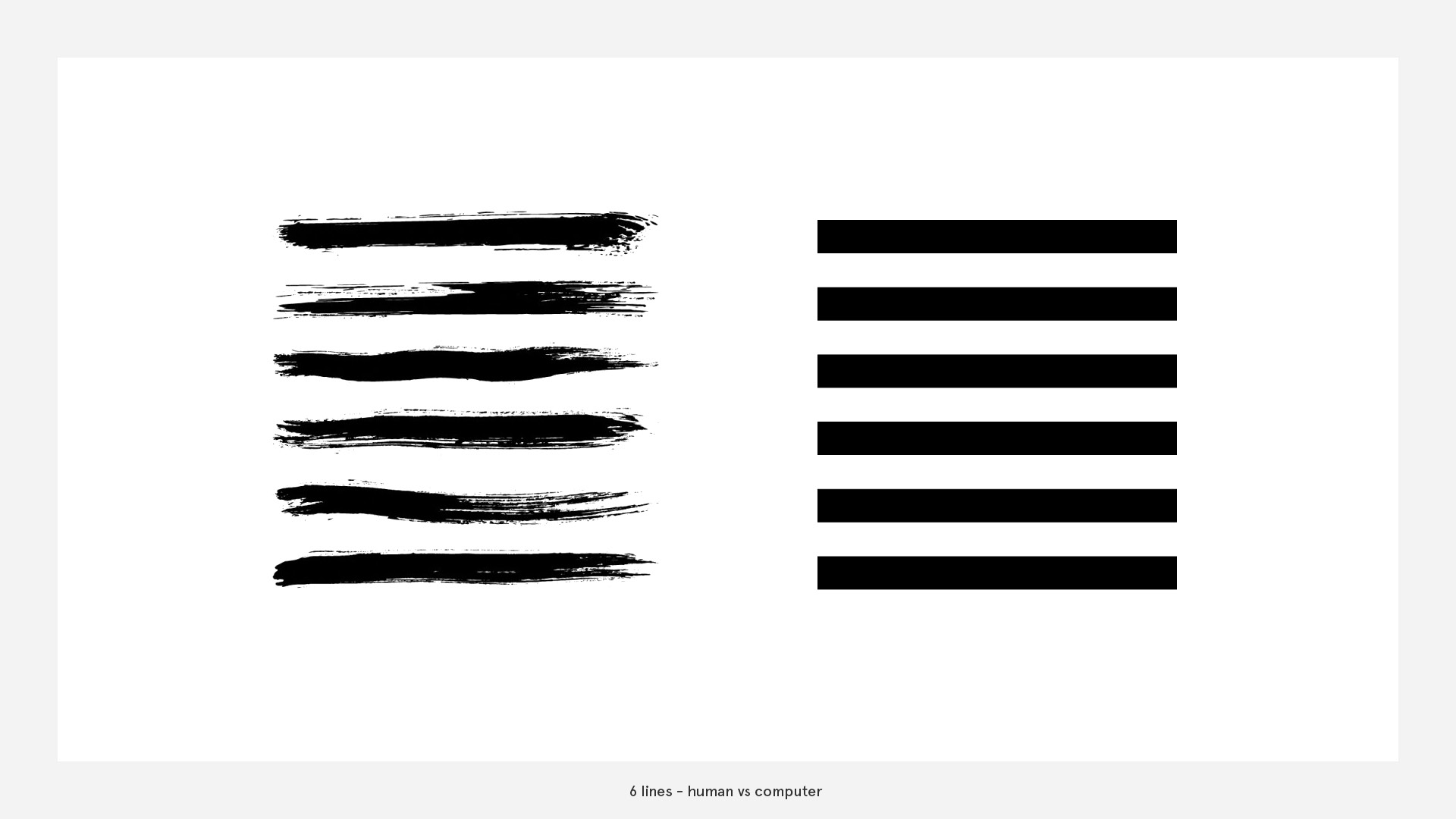
The computer is a naturally deterministic machine. This makes true chance practically impossible. You need a (deterministic) program (algorithm,...) to simulate chance.
Randomness to replace Intuition
Vera Molnar, one of the first female artists to work with computers, argues in the following video that "there is a thing that can replace intuition. It’s randomness."
Listen, if you replace the word ‘random’ with ‘intuition’, there you have it. With intuition, suddenly you say – now what if I used a curve instead of a straight line and what sort of a curve? And then you try it – that’s intuition. Randomness does the same thing. Vera Molnar, in conversation with Hans Ulrich Obrist
Randomness in Creative Work
Generative artists are chaos artists.
They have bred the unpredictable, welcomed it, harnessed it, and can fashion it into pleasing forms. Matt Pearson, Generative Art, 2011
practical:
- adding variation
- emulating (natural) complexity
- testing out the range of a system
- probability sequences (eg. Markov chains)
conceptual:
- giving up control / determinism, anarchy
- neutralisation (against personal biases)
- serendipity (allowing surprises)
- venturing past your own imagination
Random and Noise in Code
Random functions are a fundamental part of any high level programming language and have widespread applications. These are of course (and paradoxically) strictly determined by algorithms. This is why we speak about "Pseudorandomness". Essentially that also means that they are not entirely neutral from an aesthetic perspective either, which is especially apparent in the various noise algorithms.
True vs Pseudo Randomness
True
measures some physical phenomenon that is expected to be random and then compensates for possible biases in the measurement process.
- non-deterministic
- not very efficient
- aperiodic
- For Lotteries, Gambling, Sampling (Drug Screening,...)
Pseudo
uses computational algorithms that can produce long sequences of apparently random results, which are in fact completely determined by a shorter initial value, known as a seed value.
- deterministic
- very efficient
- periodic
- For Simulation & Modelling,...
Random vs. Noise
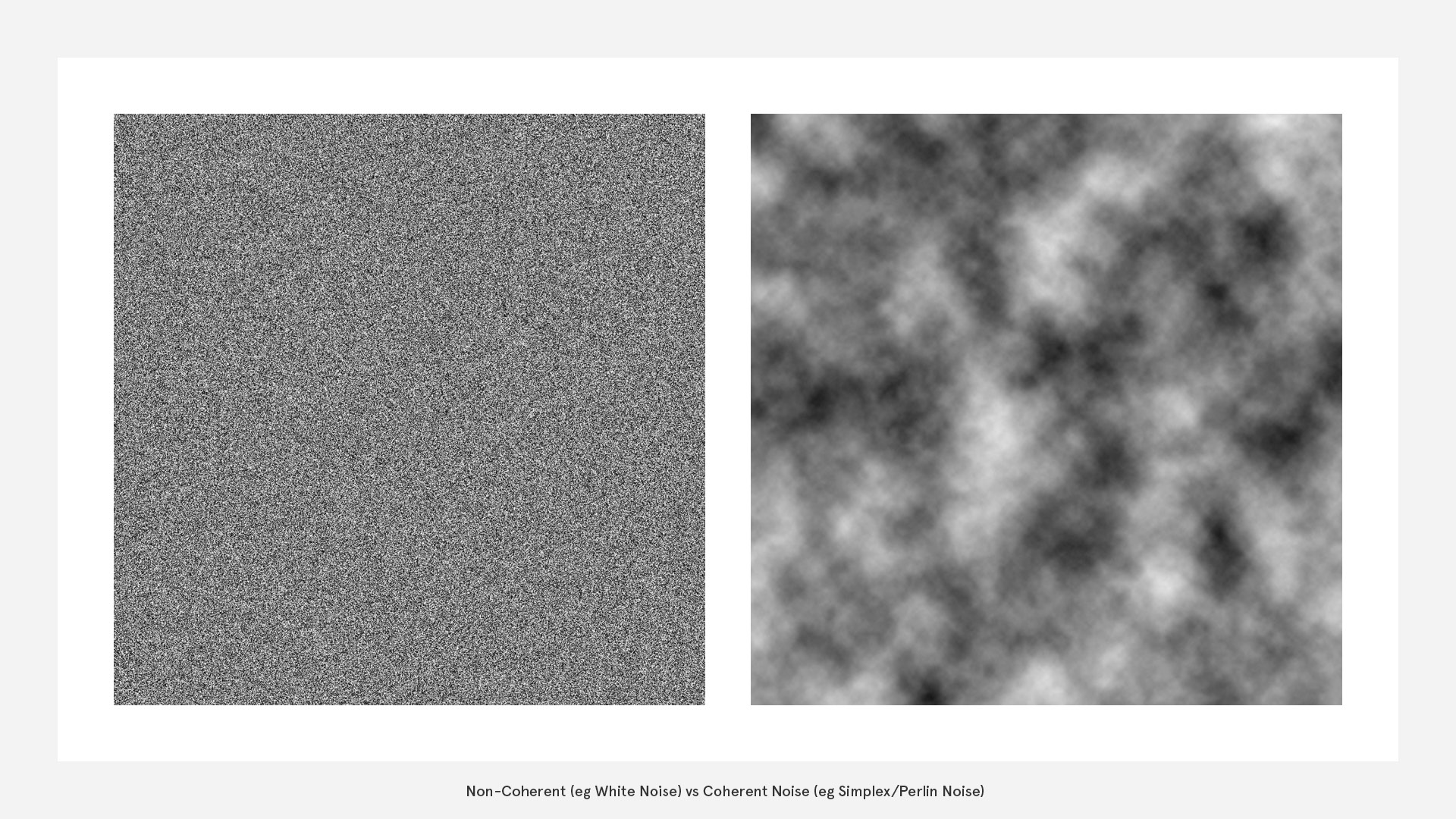 While a random generator ideally produces numbers without apparent pattern and no releation between the individual numbers, a noise algorithm will produce a "smooth" sequence of pseudo-random numbers, that have a temporal order.
The most famous is perhaps Perlin Noise, invented by Ken Perlin for the original Tron movie in the 1980s. It has a more organic quality and is stilly heavily used for emulating natural phenomena from textures to movements and structures.
So remember - noise/random is already an algorithm with a distinctive behavior and aesthetic
(see PRNG, Mersenne Twister, Perlin/Simplex, Worley,... )
Use wisely!
Chance favors the prepared mind. Louis Pasteur
Additional Links
Nature of Code, Noise (Daniel Shiffman) noise() vs random() - Video Tutorials (Daniel Shiffman)